 Ultimate guide
What Inground Pool Installation Cost Really Covers
Last Updated: November 22, 2026
Quick Summary
Inground pool installation cost in the United States typically runs from about $44,499 to $87,349, with a reported typical project cost of $65,909, according to Angi's national installation-cost data. That range hides enormous variation, because cost depends on pool type, size, shape, site conditions, and finishing features. Two neighbors with identical yards can land $30,000 apart once rock, access, and permitting enter the picture.
- A 2026 independent-dealer survey reported by Thursday Pools puts fiberglass base installation at $45,000 to $100,000 or more.
- NerdWallet lists vinyl at $20,000 to $40,000 and fiberglass at $20,000 to $85,000 depending on size.
- Concrete's flexibility can carry long-term maintenance costs, such as acid washes at $300-$1,000 every three years.
- An inground pool installation cost calculator is a planning tool, not a quote, and cannot see your soil, access route, or permitting requirements.
- Book a site walk before you sign anything, because every number is a national average until someone stands in your yard.
Table of Contents
- How much does inground pool installation cost?
- Fiberglass inground pool installation cost versus concrete and vinyl
- What a 12x24 inground pool cost looks like at each tier
- Using an inground pool installation cost calculator without getting fooled
- The inground pool installation timeline and what drives overruns
- Book a site walk before you sign a pool contract
- Frequently Asked Questions
How much does inground pool installation cost?
Inground pool installation cost in the United States typically runs from about $44,499 to $87,349, with a reported typical project cost of $65,909, according to Angi's national installation-cost data.
Here is the uncomfortable truth most cost guides skip: there is no single reliable price for a pool.
Below, we break down what each tier buys and where budgets overrun.
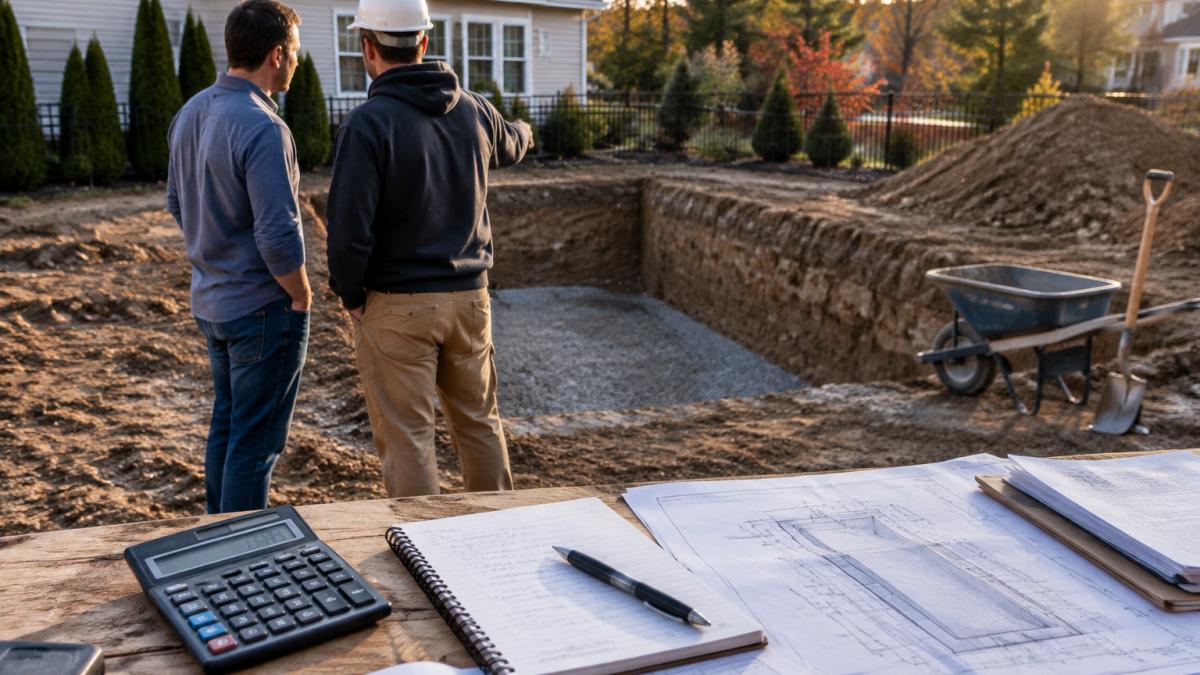
Fiberglass inground pool installation cost versus concrete and vinyl
Fiberglass inground pool installation cost sits in the middle of the market, and the material choice drives more of your budget than any other single decision.
| Pool Type | Reported Installed Range | Strengths | Watch Out For |
|---|---|---|---|
| Vinyl liner | $20,000-$40,000 | Lowest entry cost, fast build | Liner replacement every 5-9 years |
| Fiberglass | $45,000-$100,000+ | Smooth finish, low maintenance | Shell must fit your access route |
| Concrete (gunite) | $50,000-$120,000+ | Any shape, fully custom | Acid washes at $300-$1,000 every three years |
Concrete's flexibility can carry long-term maintenance costs, such as periodic acid washes. Vinyl's low starting price can be offset by a liner replacement cycle. Fiberglass wins on lifetime maintenance, but only if the shell can physically reach your yard.
If you want to see what we actually build in this climate, explore our custom inground pools and integrated spas.
What a 12x24 inground pool cost looks like at each tier
A 12x24 inground pool cost lands at the low end of the national range because it is a compact footprint, but the tier you choose still sets the floor.
- Entry tier: vinyl liner, basic filtration, minimal decking.
- Mid tier: fiberglass shell, upgraded pump and heater, broom-finished concrete patio.
- Upper tier: gunite with custom shape, water features, lighting, and integrated spa.
When comparing quotes, check whether excavation, electrical, and permits are included. Ask for the exclusion list in writing.
Ready to size your own? Pick a shape and check what fits your yard, then we price it at the site walk.
Using an inground pool installation cost calculator without getting fooled
An inground pool installation cost calculator is a planning tool, not a quote, and treating it as the latter is how budgets break. Calculators of this kind typically work from general per-square-foot figures and cannot see your soil, access route, or local permitting requirements.
Published estimates vary wildly for exactly this reason. Angi reports an average range of $44,499 to $87,349 and a typical project cost of $65,909, while River Pools and Spas' broader installed range stretches from $45,000 to $225,000. That gap is not error. It is scope.
An itemized sample budget: what a real quote should show
Headline estimates often leave out what is included. Here is the line-item structure a transparent bid should follow. Your site walk sets the real numbers.
| Line item | What it covers | Commonly excluded |
|---|---|---|
| Excavation and site prep | Dig, spoil removal, rough grade | Rock removal, dewatering, tree removal, fence removal |
| Shell and structure | Vinyl liner and wall panels, fiberglass shell, or gunite shell and rebar | Engineering for unusual soils, retaining walls |
| Plumbing and electrical | Skimmers, returns, main drain, pump circuit, bonding, conduit to panel | Panel upgrade, trenching beyond scope, gas line |
| Equipment | Pump, filter, heater, sanitizer, controls | Automation, variable-speed upgrade, salt system |
| Interior finish | Liner, gelcoat, plaster, or aggregate finish | Tile, coping upgrades, acid wash later |
| Decking and coping | Concrete, pavers, or stone; coping at the waterline | Drainage, lighting, expansion joints beyond standard |
| Permits and inspections | Application fees, plan review, required inspections | Engineering letters, variance fees, HOA approvals |
| Fencing and safety | Barrier, gate, alarm, or cover per local code | Landscaping, irrigation repair |
| Startup and first season | Water, initial chemicals, orientation | Ongoing chemicals, opening and closing |
Two bids can differ substantially and both be honest, because one includes decking, equipment, and permits and the other does not. The itemized structure is how you tell them apart.
Comparing bids and selecting a contractor
- Scope match. Confirm every bid prices the same pool, equipment models, and deck square footage. Model numbers matter more than brand names.
- Exclusion list. Require each bidder to list what is not included. The shortest exclusion list is not always the best bid, it may simply be the least honest.
- Warranties. Ask separately about shell/structure, equipment, workmanship, and liner or finish. Get terms in writing, including transferability.
- Insurance and licensing. Request a certificate of insurance showing general liability and workers' compensation, and verify the required license and registration.
- Payment schedule. Draws tied to milestones, a modest deposit, and retainage until punch list completion are standard. Large upfront payments are not.
- Change-order terms. Unit pricing for rock, soil haul-off, and extra decking should be agreed before work starts.
- References and site visits. Ask for recent projects of similar type and access, and call those owners about schedule and change orders, not just the finished pool.
Use a calculator to set a rough range, then add everything: a contingency for rock, poor soil, or access limits; decking, fencing, and landscaping as separate lines; the first year of chemicals, opening, and closing; and confirmation of whether permits and inspections are included.
If you just saw the national range and want to translate it into a monthly figure, work out roughly what a pool costs per month before you talk to anyone.
The inground pool installation timeline and what drives overruns
The inground pool installation timeline depends on pool type and scope, with simpler projects generally finishing faster than custom builds with extensive decking, water features, and landscaping. Overruns come from a predictable set of site conditions: rock, groundwater, soil instability, restricted access, drainage, and utility conflicts.
How each site risk moves the number
Rock. Excavators hit ledge, boulders, or caliche and the number moves, sometimes by five figures depending on volume and whether the rock must be blasted, chipped, or hauled off-site. A geotechnical report or test pit before final pricing is the cheapest insurance you can buy. Ask whether rock removal is priced per cubic yard, by the hour, or capped in the contract.
Groundwater and soil. A high water table means dewatering pumps, longer excavation, and sometimes an engineered drainage solution under the shell.
Access. A narrow side yard, a fence, a mature tree, or a steep grade means smaller equipment, more hand work, and more days.
Drainage and grading. Water has to go somewhere. Deck drains, French drains, dry wells, and regrading are commonly excluded from headline quotes and commonly necessary.
Utility conflicts. Irrigation lines, septic fields, gas, electric, cable, and sewer runs are the most common cause of mid-dig stoppages.
Sizing a contingency
Hold a contingency as a share of the contract price, sized larger where rock, groundwater, or access limits are known or suspected. That money is not a cushion for upgrades, it is reserved for conditions the site reveals. If it goes unused, it stays in your pocket.
Payment milestones and schedule risk
A fair payment schedule ties draws to completed stages, excavation complete, shell set, plumbing and electrical roughed in, decking poured, equipment commissioned, not to calendar dates. Never pay the majority of the contract before the shell is in the ground. Weather delays are normal; a schedule that ignores seasonal ground conditions in cold climates is a red flag.
Seeing finished projects in nearby towns tells you more about realistic timelines than any brochure. View our completed pools and hardscape work.
Book a site walk before you sign a pool contract
Book a site walk before you sign anything, because every number in this guide is a national average until someone stands in your yard.
We are family owned, and the same crew that walks your site performs the work from start to finish.
Before you book, read about who we are and how we work. Then let us price your project properly.
The gap between a national average and your actual project is where budgets live or die.
Frequently Asked Questions
How much does an inground pool cost to install?
Published estimates vary widely with pool type, size, site access, and finishing features. The spread exists because pool type, size, site access, soil conditions and finishing features all move the number. Get a site-specific quote rather than relying on a national average.
What is the cheapest type of inground pool to install?
Vinyl liner pools generally carry a lower starting price than fiberglass or concrete. Cheaper upfront does not always mean cheaper overall: vinyl liners need periodic replacement, while concrete pools may need periodic acid washes.
What costs are not included in an inground pool installation quote?
Many quotes exclude decking, patios, landscaping, fencing, pool covers, heaters and lighting. Permits, rock removal and soil remediation can also sit outside the base price. Ask every contractor for a written list of inclusions and exclusions before comparing bids, because a lower headline number often just means more items were left out.
How long does it take to install an inground pool?
Timelines vary by pool type and site conditions. Excavation, shell placement, plumbing, electrical work and decking each add time, and permitting can stall a project before digging starts. Rock, high water tables and tight lot access extend the schedule further. A written milestone schedule tied to payment stages protects you from open-ended delays.
Do inground pool installation costs include landscaping and a pool cover?
Usually not. Landscaping, patio work, fencing and covers are typically separate line items. Some builders bundle basic decking but leave planting, lighting and water features out. Confirm what the quote covers in writing, then budget separately for the backyard finishing work so the final bill does not surprise you.