 How-to
How Much Does Pool Resurfacing Cost in 2026?
Last Updated: November 26, 2026
Quick Summary
Pool resurfacing cost typically runs $6,000 to $15,000 for most US residential pools, with a national average of about $11,000. Pool size, finish material, and site conditions all move the final price, so treat that range as a starting point rather than a quote.
- Interior resurfacing alone can run $10,000 to $26,000 according to one renovation budgeting guide.
- Published calculator rates for basic resurfacing fall around $6.55 to $7.81 per square foot.
- Measure floor and wall area separately, since walls add substantially to total surface area.
- Ask each contractor to list draining, old-finish removal, and waterline tile separately to avoid misleading low bids.
- Get at least three itemized bids, measured the same way, and compare them line by line.
Table of Contents
- How Much Does Pool Resurfacing Cost?
- Pool Resurfacing Cost Per Square Foot and How to Estimate Your Pool
- How Long Pool Resurfacing Lasts and What Affects Its Lifespan
- Next Step: Request a Site Walk and Itemized Estimate
- Frequently Asked Questions
How Much Does Pool Resurfacing Cost?
Pool resurfacing typically costs $6,000 to $15,000 for most residential pools in the United States, with a national average of about $11,000 according to Angi's national pool resurfacing cost estimate. That figure is a starting point, not a quote. Pool size, finish material and site conditions all move the final price.
Interior resurfacing alone can cost more. One renovation-budget guide puts that work at $10,000 to $26,000 (Beltway Pools' renovation budgeting guide). The gap between those numbers is exactly why a single average can mislead you.
Here is how the main factors compare:
| Factor | What It Changes | Why It Matters |
|---|---|---|
| Pool size | Total surface area to cover | Larger pools cost more to finish |
| Finish material | Price per square foot | Premium finishes raise the total |
| Existing condition | Prep and repair work | Cracks and old finish add labor |
| Site access | Equipment and labor time | Tight yards slow the crew |
Watch out: a low bid often leaves out draining, old-finish removal or waterline tile work. Ask each contractor to list those items separately.
Pool resurfacing cost range and interior-only cost range
Pool Resurfacing Cost Per Square Foot and How to Estimate Your Pool
Per-square-foot pricing is the most useful starting point because it scales with the actual surface area a crew must prep, repair, and finish. Published calculator rates for basic resurfacing commonly fall in the $6.55 to $7.81 per square foot range (Homewyse pool resurfacing calculator), but that rate typically assumes a standard plaster finish over a pool in fair condition with normal access. Premium finishes, extensive repairs, and difficult site access push the effective rate higher.
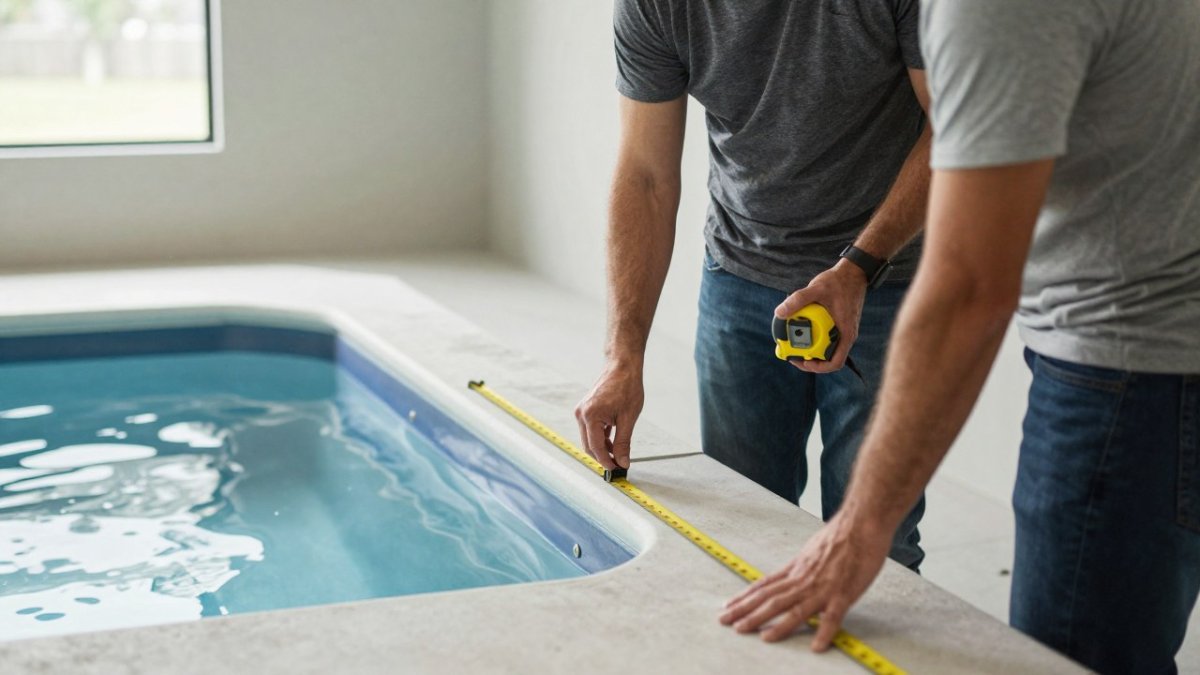
To estimate your pool's surface area, measure the floor and the walls separately. A 20 x 40 pool has about 800 square feet of floor area, but the walls add substantially more. For a pool 3 feet deep at the shallow end and 8 feet at the deep end, the average depth is about 5.5 feet, so the wall area is roughly the perimeter (120 linear feet) multiplied by the average depth, or about 660 square feet. That puts total surface area near 1,460 square feet, not 800, using only the floor area will underestimate your project by nearly half.
Here is how the inputs combine into a realistic quote. Assume a 20 x 40 pool with 1,460 square feet of surface area, a standard plaster finish, normal access, and no major structural repairs:
Watch out: a per-square-foot quote that does not state whether draining, old-finish removal, and waterline tile are included is not comparable to one that does. Ask each contractor to measure the same way and to list those items as separate lines so you can see what the rate actually covers.
Our approach is to get at least three itemized bids, all measured the same way, and to compare them line by line rather than on the bottom number alone. A cost calculator gives you a range; a site walk with measured square footage gives you a number you can plan around. Angi's pool resurfacing cost guide covers the same factors in more depth.
How Long Pool Resurfacing Lasts and What Affects Its Lifespan
Exact finish lifespans vary by climate, usage, and maintenance, so ask each contractor what lifespan they expect for your pool and why.
Factor expected lifespan into your budget, not just the first bid, and ask each contractor what lifespan they expect for your pool and why.
Next Step: Request a Site Walk and Itemized Estimate
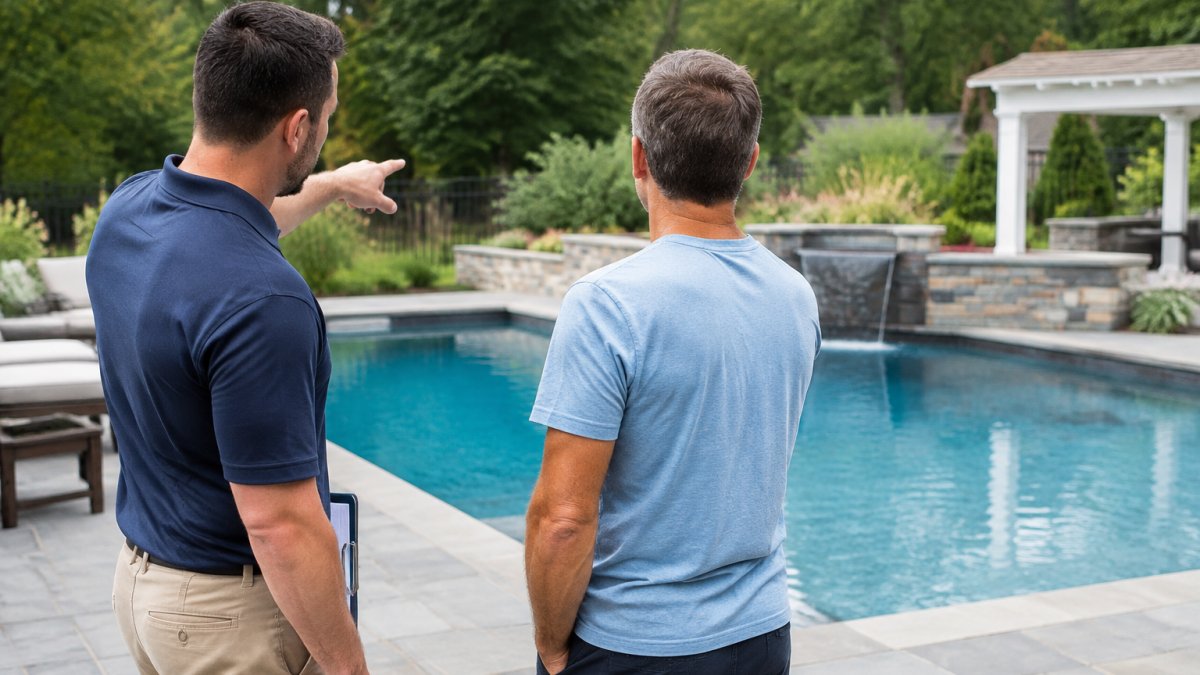
Before you sign anything, ask for a written, itemized estimate listing draining, old-finish removal, repairs, finish material and any waterline tile work. You can also look at pool and renovation projects we have completed in Chester, Monroe, Goshen, Warwick, Washingtonville, Middletown and Woodbury to see local examples. At The Backyard Bosses, we invite you to book a site walk to talk through your pool and your options. Before you reach out, you can review what our texting covers and how to opt out. Browse our pool renovation services to see what a full renovation covers, or estimate your monthly payment before you talk to anyone.
Frequently Asked Questions
Does pool resurfacing include repairs to cracks or plumbing?
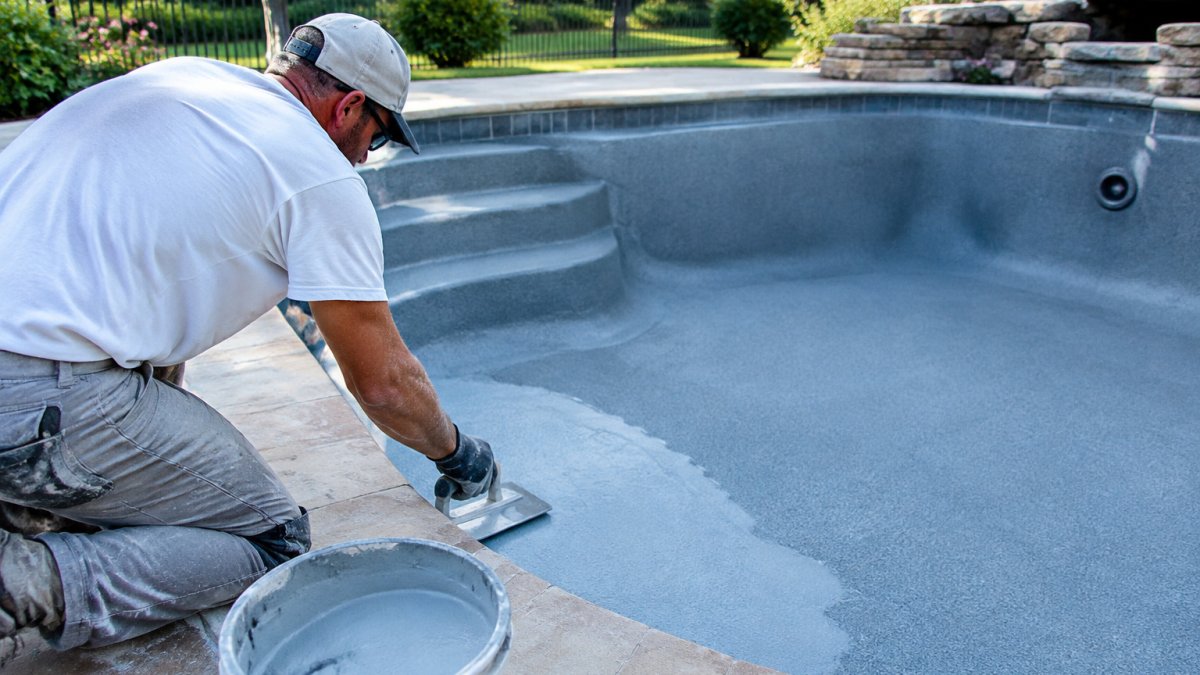
Not always. A resurfacing quote usually covers draining, removing the old finish, and applying the new surface, but cracks, damaged plaster, and plumbing problems are often priced separately. Ask each contractor to list whether surface repair, waterline tile replacement, coping work, and plumbing are included. Get these items written into the estimate so you can compare bids on the same scope of work.
How can I compare pool resurfacing estimates?
Start by confirming that every bid covers the same pool size, finish material, and prep work. Check whether each price includes draining, old finish removal, repairs, refilling, and water chemistry. Look for a clear list of exclusions and ask who will perform the work. A bid that is much lower than the others often leaves out preparation or repair items, so compare line by line rather than by total alone.